
4 CDs of Christmas Songs and Stories for Kids!








In How Not to Die, Dr. Michael Greger, the internationally-renowned nutrition expert, physician, and founder of NutritionFacts.org, examines the fifteen top causes of premature death in America–heart disease, various cancers, diabetes, Parkinson’s, high blood pressure, and more–and explains how nutritional and lifestyle interventions can sometimes trump prescription pills and other pharmaceutical and surgical approaches to help prevent and reverse these diseases, freeing us to live healthier lives.
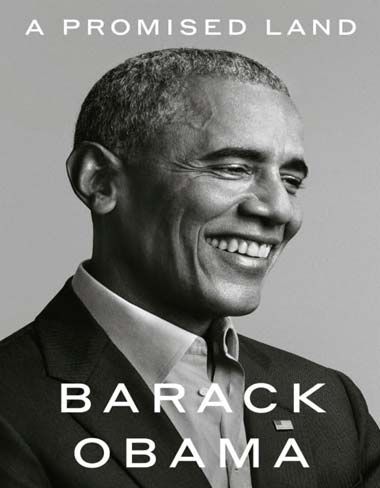
A riveting, deeply personal account of history in the making – from the president who inspired us to believe in the power of democracy.
In the stirring, highly anticipated first volume of his presidential memoirs, Barack Obama tells the story of his improbable odyssey from young man searching for his identity to leader of the free world, describing in strikingly personal detail both his political education and the landmark moments of the first term of his historic presidency – a time of dramatic transformation and turmoil.

Conventional sleep tips were not enough to help me sleep. A heavy tranquilizer nearly destroyed my life. But I was shocked when a unique combination of foods and nutrients cured my insomnia. I’ve slept well for almost ten years now because of them. Do you want natural, concrete, research-based recommendations to get the right stuff into your body for a good night’s sleep? That’s what I’ll give you, in as few words as possible.
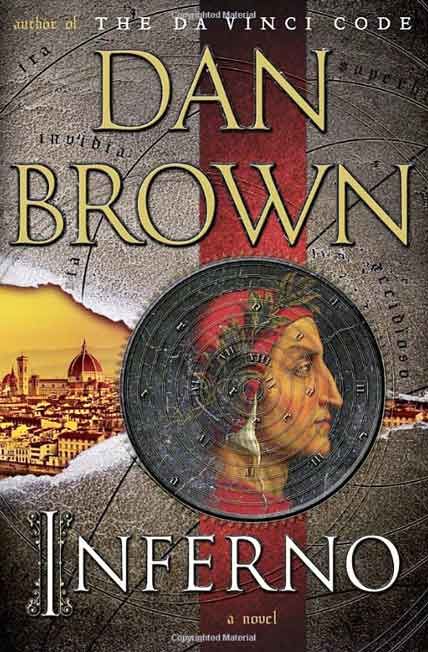
In his international blockbusters The Da Vinci Code, Angels & Demons, and The Lost Symbol, Dan Brown masterfully fused history, art, codes, and symbols. In this riveting new thriller, Brown returns to his element and has crafted his highest-stakes novel to date.
In the heart of Italy, Harvard professor of symbology, Robert Langdon, is drawn into a harrowing world centered on one of history’s most enduring and mysterious literary masterpieces . . . Dante’s Inferno. Against this backdrop, Langdon battles a chilling adversary and grapples with an ingenious riddle that pulls him into a landscape of classic art, secret passageways, and futuristic science. Drawing from Dante’s dark epic poem, Langdon races to find answers and decide whom to trust . . . before the world is irrevocably altered.
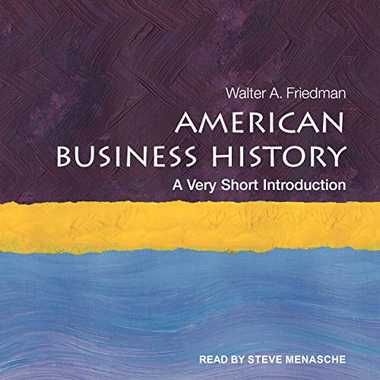
By the early 20th century, it became common to describe the United States as a “business civilization”. President Coolidge in 1925 said, “The chief business of the American people is business.” More recently, historian Sven Beckert characterized Henry Ford’s massive manufactory as the embodiment of America: “While Athens had its Parthenon and Rome its Colosseum, the United States had its River Rouge Factory in Detroit…. ” How did business come to assume such power and cultural centrality in America?
This volume explores the variety of business enterprise in the United States and analyzes its presence in the country’s economy, its evolution over time, and its meaning in society. It introduces listeners to formative business leaders (including Elbert Gary, Harlow Curtice, and Mary Kay Ash), leading firms (Mellon Bank, National Cash Register, Xerox), and fiction about business people (The Octopus, Babbitt, The Man in the Grey Flannel Suit). It also discusses Alfred Chandler, Joseph Schumpeter, Mira Wilkins, and others who made significant contributions to understanding of America’s business history. This VSI pursues its three central themes – the evolution, scale, and culture of American business – in a chronological framework stretching from the American Revolution to today.
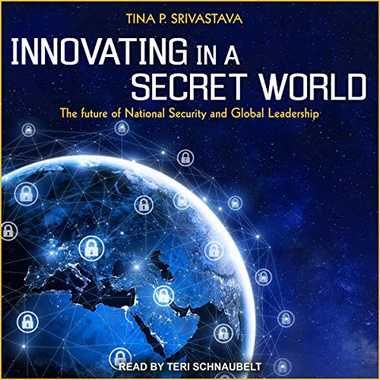
Our national security increasingly depends on access to the most sophisticated and advanced technology. Yet the next time we set out to capture a terrorist leader, we may fail. Why? The answer lies in a conflict between two worlds. One is the dynamic, global, commercial world with its thriving innovations. The other is the world of national security, in which innovation is a matter of life or death. The conflict is about secrecy.

Brazilian Portuguese course includes bilingual sentences with English, Portuguese and pronunciation in IPA all included as embedded fonts. Basic Pronunciation Guide (a separate pronunciation book is in preparation) – These comprehensive courses includes the books and audio files.
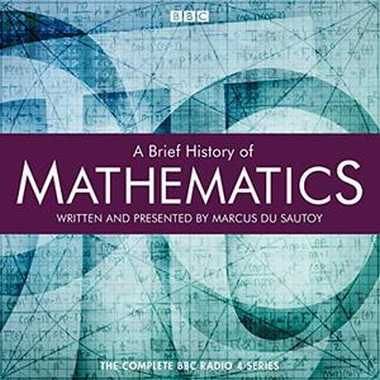
Marcus du Sautoy (Author, Narrator), “A Brief History of Mathematics: Complete Series”
This 10-part history of mathematics reveals the personalities behind the calculations: the passions and rivalries of mathematicians struggling to get their ideas heard. Professor Marcus du Sautoy shows how these masters of abstraction find a role in the real world and proves that mathematics is the driving force behind modern science.
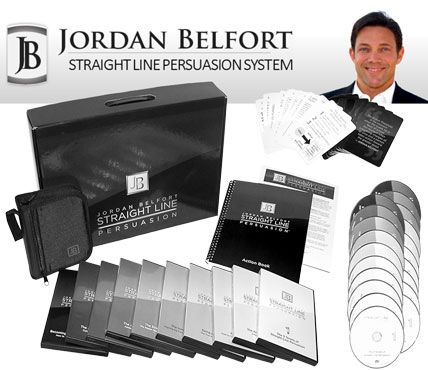
Persuasion is the magic bullet to creating massive success, wealth, and fulfillment. There is no more important a skill both in business and in your personal life. This cornerstone, proprietary step-by-step training system was recorded live at a private event and has been put together in bite-sized chunks-with Jordan walking you through each piece-so you can immediately apply what you’re learning and put it to use.
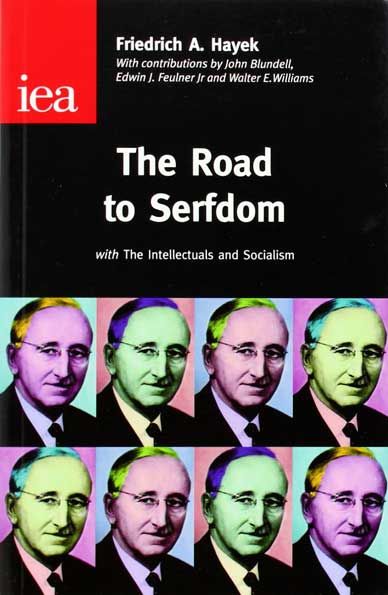
In ‘The Road to Serfdom’ F. A. Hayek set out the danger posed to freedom by attempts to apply the principles of wartime economic and social planning to the problems of peacetime. Hayek argued that the rise of Nazism was not due to any character failure on the part of the German people, but was a consequence of the socialist ideas that had gained common currency in Germany in the decades preceding the outbreak of war. Such ideas, Hayek argued, were now becoming similarly accepted in Britain and the USA. On its publication in 1944, ‘The Road to Serfdom’ caused a sensation.
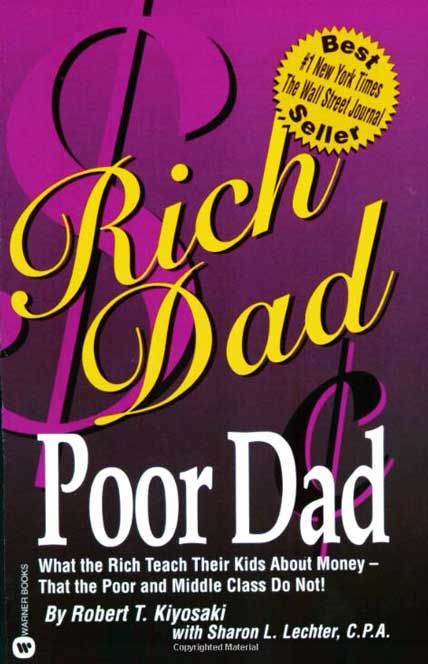
Rich Dad, Poor Dad: What the Rich Teach Their Kids About Money: That the Poor and the Middle Class Do Not!
Top 10 Bestseller on The Wall Street Journal, USA Today and the New York Times
Rich Dad, Poor Dad is Robert Kiyosaki’s first best-selling book. In it, he advocates financial independence by means of investing, real estate, owning businesses, and the use of finance protection tactics.
Rich Dad, Poor Dad is written in what is meant to be an entertaining anecdotal manner to make finances interesting.The most central element stressed by Kiyosaki is the advocacy of owning the system or means of production, rather than being an employee of someone else.